The Making of a Suspicion: Pujarini Pradhan
When Pujarini Pradhan went viral, the internet celebrated her. When she grew too big, it started asking questions. What happened in between tells us everything.
ARTISTS
Anuraag Bhattacharya
3/31/20264 min read
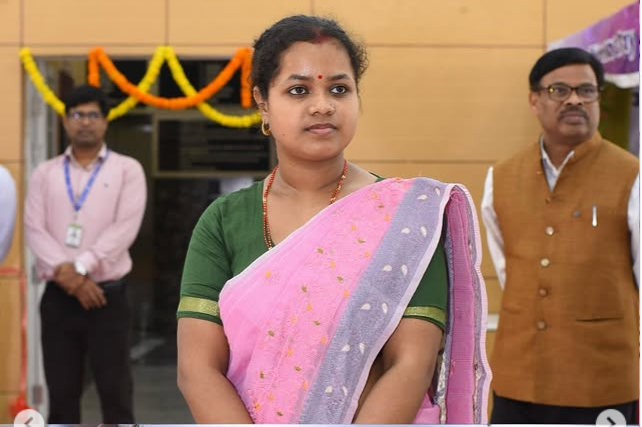
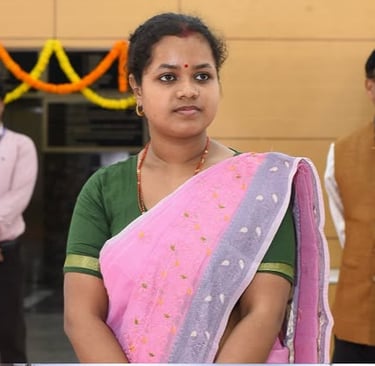
She films from her home in East Midnapore, West Bengal. There is no ring light, no curated bookshelf, no carefully chosen linen top. There is a homemaker, a camera, and something to say. For a long time, that was enough for the internet to love Pujarini Pradhan — the woman behind the account @lifeofpujaa — and call her a breath of fresh air.
Then she started talking about feminism. Then politics. And then, very quickly, the breath of fresh air became something far more unsettling to some corners of online India: a threat to the idea of who is allowed to have a platform. This past week, Pujarini found herself at the centre of a controversy that began as an allegation and metastasised into a cultural argument. The accusation: that she is an "industry plant" — a creator whose apparent ordinariness is itself a manufactured product, a calculated performance of authenticity designed to generate engagement. The implication: that a rural homemaker simply could not have built what she has built without someone, somewhere, pulling strings.
"The criticism intensified as her platform grew and her content began to include stronger opinions on subjects such as feminism and politics."
PUJARINI PRADHAN, IN HER VIDEO RESPONSE
Who She Is
Most people who discovered Pujarini through her viral videos assumed she was illiterate — or at the very least, unread. They were surprised to find out she is a graduate who loves foreign films, devours books, and speaks with authority on social issues. The gap between their assumption and her reality is, in itself, the entire story.
Her videos centre on everyday life, reading, culture, and personal commentary. Shot largely from her home, they stand apart from the polished visual language of typical influencer culture. That simplicity was, initially, her greatest asset. She looked real. She sounded real. She felt, to audiences exhausted by performative aesthetics, genuinely unmediated.
What changed is what always changes: she got big.
The Accusation
The "industry plant" discourse gained traction after several creators and commentators began publicly questioning the origins of her growth. Two accounts in particular — Otherwarya (Aishwarya Subramanyam, former deputy editor at Vogue India and chief editor at Elle India, now co-founder of a digital content studio) and @ima_therapissed — emerged as prominent voices raising these questions.
WHAT IS AN "INDUSTRY PLANT"?
In music, the term refers to an artist presented as an independent discovery of who is actually backed by a major label from the outset. On social media, the accusation implies that a creator's apparent grassroots growth is secretly orchestrated — that the "authentic" origin story is itself manufactured.
The critics' argument, as it circulated online, pointed to a few things: the consistency of her content, the speed of her growth, and — crucially — the fact that she works with an agency for brand partnerships. To some, that last detail was the smoking gun. For others, it was entirely beside the point.
Her Response
Pujarini did not stay silent. In a video that has since circulated widely, she addressed the allegations with the same directness that characterises her regular content. Yes, she works with an agency — but the agency manages brand collaborations only. The ideas, the filming, the editing: all her own. But she did not stop at the facts. She pushed further, naming something that the controversy had so far left unspoken: that the scrutiny itself followed a predictable pattern. The criticism, she noted, had intensified in proportion to the growth of her opinions — not just the growth of her audience. As she began speaking more explicitly about feminism and politics, the narrative around her shifted from admiration to interrogation.
"Much of the criticism is rooted in assumptions about what creators from modest backgrounds are expected to look like, sound like, or speak about."
PUJARINI PRADHAN
The Voices That Joined
She was not alone in making that argument. The discourse rapidly widened as other creators weighed in, and the conversation on community forums shifted decisively toward examining the classism embedded in the backlash.
CREATORS WHO JOINED THE CONVERSATION
Uditi Kukreti @uditea_creates: Entered the discourse through a dedicated Reel, addressing the assumptions baked into the "industry plant" framing when applied to nonurban creators.
Helly @thehellyblog: Travel and digital nomad creator who brought her own lens on what "legitimate" creator origin stories look like — and who gets the benefit of the doubt.
Sohini @deenoleepi: Weighed in on the broader pattern of interrogation that follows creators who step outside the identity first assigned to them by the internet.
Prerna Subramanian @doctorofpopculture: Posted two separate Reels on the controversy — one of the more substantive engagements with the pop-cultural mechanics at play, drawing on her background in cultural analysis.
What This Is Really About
The internet has a complicated relationship with stories of struggle. It celebrates them — enthusiastically, loudly, in the language of inspiration and resilience — right up until the moment that struggle starts to translate into something uncomfortable: influence, financial stability, authority. At that point, the story must be explained. Investigated. There must be a catch. There must be someone behind the curtain. Because the alternative — that a woman from rural Bengal could build an audience through intelligence, consistency, and a clear point of view — requires a more fundamental reckoning with what we assumed about the internet and who it was built for. The "industry plant" accusation, in its Indian social media context, lands very differently than its music-world origins. Here, it carries an extra freight: the suggestion that the creator's biography — the modest home, the ordinary background, the lack of urban polish — is itself the product being sold. That thordinariness is a brand. That the authenticity is the performance.
What the critics perhaps did not anticipate is how transparently that logic reveals its own biases. Urban creators who work with agencies are assumed to be professionals. Rural creators who work with agencies become suspect. Intelligence is expected from certain postcodes. From others, it requires an explanation.
"The digital space frequently celebrates stories of struggle, but becomes uneasy when that struggle translates into influence, financial stability, and opinion-led authority."
OBSERVED ACROSS THE DISCOURSE
The Verdict — If There Is One
There is no formal verdict, of course. There rarely is in these internet trials. What there is, instead, is a record: a week of conversation that stripped back several comfortable assumptions about who the Indian creator economy was imagined to be for. Pujarini Pradhan did not go viral because she was managed or manufactured. She went viral because she said things that resonated, in a voice that felt honest, from a place that the algorithm had not been trained to expect. That is not a suspicious origin story. It is, in fact, the only kind that matters. The real question this controversy raises is not whether she is authentic. It is why authenticity, in her case, needed to be proven at all.
This feature was compiled from publicly available discourse, social media reporting, and creator responses published between March 28–31, 2026.