
Writing in the Age of AI: Threat or Creative Superpower?
Is AI replacing writers or empowering them? Read to know how writing is transforming in the age of artificial intelligence and what it means for creativity.
WRITER
Mayank Thapa
11/25/20253 min read
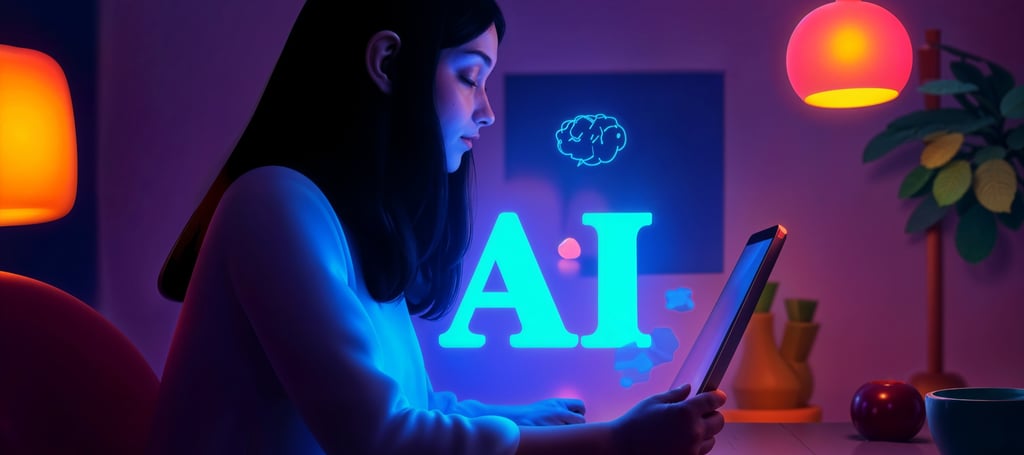
The world of storytelling, content creation, publishing, and communication is undergoing a historic transformation. With tools like ChatGPT, Bard, Claude, Jasper, and dozens more evolving every month, writing in the age of AI has shifted from a simple academic or creative practice to a hybrid collaboration between human imagination and machine intelligence. The rapid rise of Artificial Intelligence has sparked global debate: Is AI a threat to human creativity, or is it a revolutionary superpower?
As AI becomes central to modern content economies, this question grows louder. Authors, marketers, students, journalists, researchers, and screenwriters are all trying to make sense of the new landscape. Understanding where we stand, and where we’re heading, is important not just for creators, but for the future of culture itself.
The Rise of AI Tools: A Paradigm Shift in Creativity
Just a decade ago, writing was exclusively a human process built on practice, skill, discipline, and perspective. Today, writing in the age of AI looks very different. Tools can now generate blogs, scripts, essays, captions, reports, and even poetry within seconds. What previously required hours of brainstorming can now be structured in minutes.
These tools are not random generators. They have learned from billions of words across the internet—absorbing grammar rules, tone variations, storytelling styles, and brand language systems. Because of this, many see writing in the age of AI as an evolution, not a replacement.
But the debate remains: if AI can write, does human writing still matter?
The Fear: Is AI a Threat to Writers?
A significant portion of creators believe that writing in the age of AI represents a threat. Concerns include:
Loss of originality
Devaluation of creative skills
Replacement of human jobs
Diminished emotional depth in writing
Homogenization of global storytelling voices
These fears are understandable. After all, AI can now generate content faster than any human, and companies increasingly seek speed and scalability.
However, the key missing ingredient is perspective.
AI can analyze, but it cannot live.
It can imitate emotions, but it cannot feel them.
It can predict patterns, but it cannot experience change.
So rather than being the end of writing, writing in the age of AI may simply redefine what counts as good writing.
Human vs. AI Creativity: What Sets Us Apart?
The soul of storytelling lies in experience, vulnerability, memory, and cultural nuance. While AI can simulate these elements, it cannot originate them from lived reality.
Humans bring:
Emotion
Identity
Personal history
Ethics
Curiosity
Imagination
AI brings:
Scale
Speed
Pattern recognition
Structure
Efficiency
Together, they form what many call augmented creativity—a new framework where writers are not just creators but directors.
New Skills for Writers in the AI Era
To thrive with writing in the age of AI, creators must adopt new competencies. The future belongs to writers who can:
1. Prompt Strategically: AI responds to instruction. Better prompts create better outcomes.
2. Edit Intelligently: The first AI-drafted version is never the final version.
3. Personalize: Writers must infuse their unique tone, voice, and worldview.
4. Fact-Check and Evaluate: AI can hallucinate—humans must validate.
5. Adapt Across Platforms: From articles to scripts to SEO content to storytelling, versatility matters.
Writers are no longer just authors. They are creative directors of digital expression.
Ethics and the Value of Authenticity
With automation rising, the ethical conversation around writing in the age of AI is unavoidable. Is AI-generated writing authentic? Should AI be credited? Should students use AI for academic writing? Should authors disclose AI collaboration in publishing?
There is no universal rule yet, but authenticity will define trust. Readers will increasingly value writing that feels human, even if supported by AI. Transparency may become a standard ethical expectation, just like citing sources in research.
AI and the Future of Jobs: Replacement or Reinvention?
Instead of eliminating writing jobs, AI is transforming them.
New roles now exist, including:
Prompt engineers
AI creative strategists
AI-assisted scriptwriters
AI publishing consultants
Conversational UX writers
Writing in the age of AI is reshaping the industry, not shrinking it. The demand for high-quality, personalized, and emotionally intelligent writing is increasing, not fading.
The Future of Storytelling
As AI evolves, creators can expect:
Hyper-personalized content
Multilingual storytelling with cultural precision
Interactive and adaptive narratives
AI-generated world-building and research
Hybrid writing teams (humans + AI models)
The evolution is clear: creativity is no longer limited by time, capacity, or technical skill.
Is Writing Still Meaningful? Absolutely.
Even in an automated world, words continue to build connections. Whether handwritten, typed, or generated with assistance, writing remains a fundamental human act—an extension of thought.
The magic of writing in the age of AI is that it forces us to ask deeper questions:
What makes expression valuable?
What is the role of human imagination?
How do we preserve emotion in a digital world?
The answers will shape the future of culture.
Final Thoughts: Threat or Superpower?
So, is writing in the age of AI a threat or a creative superpower?
The truth is simple:
For those resistant to change, AI feels like competition.
For those willing to evolve, AI becomes a multiplier of talent.
Writing isn’t disappearing, it’s expanding.
Human creativity remains irreplaceable. AI is simply the bridge that allows ideas to flow faster, further, and more powerfully.
In the future, the best writing will not be written by AI.
It will be written with AI.
And those who learn to collaborate with technology will shape the next golden era of storytelling.